

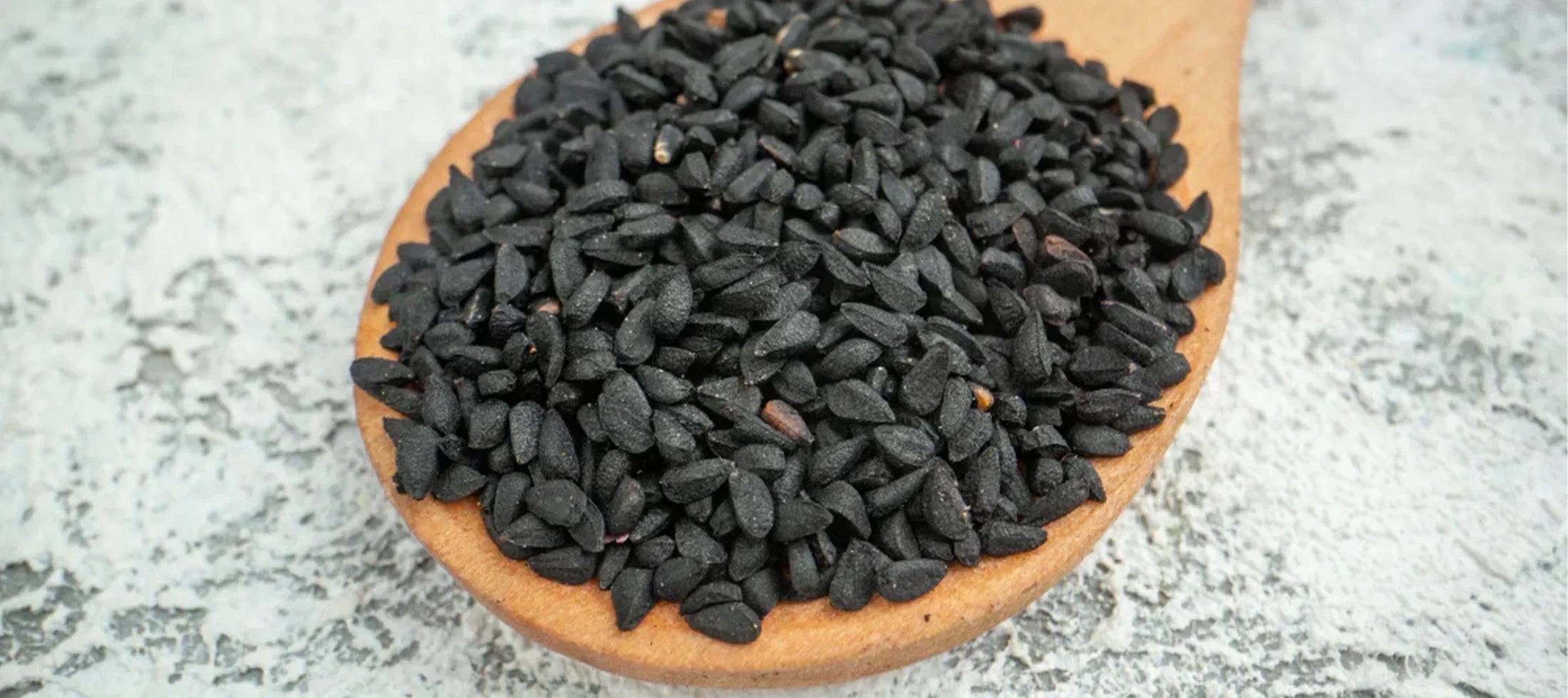
Prophet Muhammad (PBUH) said kalwanji is healing for all diseases except death. Having a history of several centuries, kalwanji is a widely used plant for its medicinal benefits and its uses in culinary. It also has many scientifically proven benefits. Also, Not only is kalwanji flavorful, but it acts as a natural remedy for maintaining overall health.
Nutritional Profile of Kalonji
The seeds are small, black, and sharp in taste. But inside, they are full of strength. They give protein, fiber, fats, and carbohydrates. These are all needed by the body every single day.
There are also minerals and vitamins. The oils inside are strong. The antioxidants are the most powerful. They fight cell damage and they fight weakness.
This is why kalonji is not just spice in food. It is nutrition, healing, and energy at the same time. People eat it for taste but the body gets more than taste. It gets health.
Historical and Traditional Uses
Kalonji is old. It was mentioned in prophetic medicine. It was said to heal all except death. People would take it raw, some mixed with honey, others in warm water.
The oil was used for skin problems and to stop hair fall. In South Asia, it is still used the same way. In kitchens you will see it in the spice box. It is in curries, in bread, in pickles.
Ayurveda used it. Unani doctors gave it for fever and digestion. The reason it never disappeared is simple. It worked then, it works now.
Health Benefits of Kalonji
- Boosting Immunity: Kalonji supports immunity. The antioxidants inside fight germs and sickness. People who take it daily notice fewer colds and fewer fevers. It makes the body stronger from inside.
- Supporting Digestive Health: Kalonji helps the stomach work better. It reduces gas, bloating, and cramps. People who suffer with constipation or heaviness get relief. It also keeps the gut clean and active.
- Managing Blood Sugar Levels: Kalonji is helpful for diabetics. It improves insulin use. It lowers sugar after meals and keeps levels more steady. People who take it with honey or water in the morning see better control. But it is not a replacement for medicine, it is extra support.
- Heart Health Benefits: Kalonji protects the heart. It lowers cholesterol, supports normal blood pressure, and improves circulation. When blood flows better, the heart has less strain. With time, people get long-term protection for their heart.
- Anti-Inflammatory and Antioxidant Properties: Kalonji reduces swelling. It helps with joint pain. It slows aging and protects cells. These properties are important because they stop chronic problems from building up. It keeps the body stronger for longer years.
- Skin and Hair Benefits: Kalonji is famous for beauty. The oil clears acne, dryness, and dull skin. It makes the face glow. On hair, it strengthens roots, reduces dandruff, and prevents hair fall. Over time hair looks thicker and feels stronger.
Recommended Dosage and Safety Precautions
-
1–2 grams of seeds daily with honey or water
-
Sprinkle seeds on bread, curries, or salads
-
Half teaspoon of oil per day, always diluted with olive or coconut oil
-
Apply diluted oil on skin or hair for best results
-
Too much can upset the stomach or lower sugar too far
-
Pregnant or breastfeeding women should use only with doctor advice
Small amounts daily are safe. People see benefits only with steady use.
Conclusion
Kalonji has been around for centuries. It is trusted and proven. It is not just tradition, it is science now as well. It helps immunity, digestion, sugar, heart, swelling, skin, and hair. It is one of the few remedies that works in so many areas.
Seeds can be chewed. Oil can be applied. Both ways bring results. It is easy to add to life. It is affordable, safe, and natural.
Old people always kept it in their homes. New people should do the same. Tradition showed the way. Modern tests confirm the truth. Kalonji remains a cure in every house. It is not just spice. It is protection. It is healing. It is strength.
FAQs
Can kalonji help in weight loss?
Yes. Kalonji helps burn fat by boosting metabolism. It makes the body use energy more efficiently. People who take it with honey in the morning often say they feel lighter. It also helps reduce cravings, which is important for weight loss. Combined with walking or light exercise, the results come slowly but surely.
How can I consume kalonji daily?
Seeds can be chewed raw or taken with honey. They can be mixed in curries or bread. Oil can be used in very small amounts or applied on the body. Many people drink it with warm water first thing in the morning. Others sprinkle it on food throughout the day. Consistency is more important than quantity.
Are there any side effects of taking kalonji?
Small amounts are safe. If you eat too much it can upset the stomach. It can also reduce blood sugar more than needed. Kalonji is strong, so moderation is key. Used carefully, it is safe even for long-term use. Always start small. Then increase slowly if the body accepts it.
Can kalonji be used for controlling blood sugar levels?
Yes. It helps the body respond better to insulin. It lowers spikes after eating and keeps sugar levels steady. It is not a replacement for prescribed treatment, but it is a strong support. People with diabetes have used it for years. Doctors also recognize its value when used correctly.
Is kalonji safe for pregnant or breastfeeding women?
Small seasoning amounts are safe. Oil or high doses should not be taken without medical advice. Pregnancy is sensitive, and safety must come first. Some people use it in food, but not as a supplement. For breastfeeding women, food amounts are fine, but larger doses must be checked with a doctor.
Can I use kalonji oil instead of seeds?
Yes. Oil has the same benefits. It can be consumed in tiny amounts or applied to hair and skin. Always dilute it before applying. Some people find oil easier than chewing seeds. For hair growth, oil works better. For digestion, seeds work better. Both are useful, and both can be included in routine.
Share:
What Happens If You Do Not Understand The Value Of Rest Days
Ramzan: Your Guide to Fat Loss | Training and Diet While Fasting